
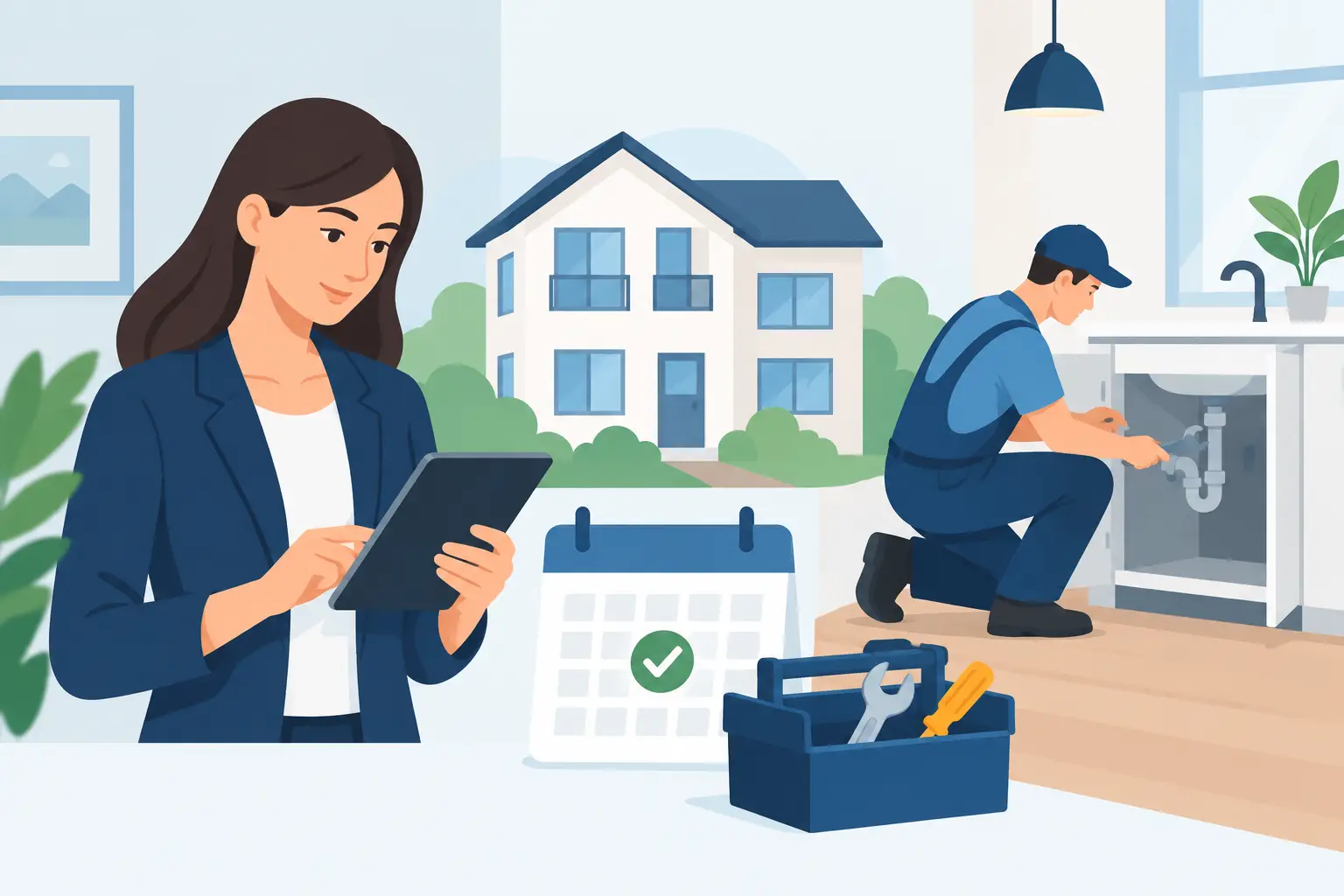
How to Manage Rental Repairs Without Delays
A leaking hot-water system on a Friday afternoon is not the time to decide who can approve a plumber, what the spending limit is, or how the tenant should be updated. To manage rental repairs well, owners need a process that makes the next step clear from the moment an issue is reported.
Good repair management protects the condition of the property, supports tenant safety and comfort, and reduces the likelihood of a small fault becoming an expensive claim. It also helps maintain a professional rental relationship. Tenants want to know their report has been received and when they can expect action. Owners want confidence that work is necessary, fairly priced and properly completed.
How to manage rental repairs with a clear process
The most effective process is simple: receive the report, assess urgency, authorise the right work, keep everyone informed, and confirm the repair has been completed. Consistency matters more than complexity.
A repair request should capture the practical details early. This includes the issue, its location, when it started, whether there is an immediate safety risk, and whether damage is getting worse. Photos or short videos can help a contractor identify likely causes before attending, particularly for leaks, damaged fittings, appliance faults or water ingress.
It is also useful to check the tenancy records before arranging work. Look at the entry condition report, maintenance history, previous invoices and any warranties. A recurring blockage, for example, may need a different response from a first-time drainage issue. Repeated patch repairs can cost more over time than identifying and fixing the underlying cause.
For a managed property, the property manager should acknowledge the report promptly, explain what will happen next and keep a record of all communication. This creates a reliable trail for the owner, tenant and contractor.
Separate urgent repairs from routine maintenance
Not every repair requires the same response. The priority should reflect safety, security, essential services and the risk of further property damage.
Urgent repairs commonly include a major water leak, an electrical fault, a gas leak, a serious roof leak, a failure of essential hot water or cooking facilities, a blocked toilet where there is no alternative, or damage that leaves the home unsecured. Exact definitions and response requirements differ between Australian states and territories, so the tenancy agreement and applicable local legislation should guide the process.
For an urgent issue, the priority is to make the property safe and prevent further loss. This may mean sending an approved emergency contractor immediately, even if the full repair requires a later visit. A plumber may isolate a leak first, then return with parts. That is often the right decision when waiting could damage floors, cabinetry or neighbouring properties.
Routine matters should still receive a timely response. A dripping tap, loose cupboard hinge, worn flyscreen or minor paint damage may not be urgent, but leaving requests unanswered creates frustration and can lead to avoidable deterioration. Set realistic expectations about inspection, quoting and completion rather than allowing a routine request to disappear into an inbox.
Give tenants clear emergency instructions
Tenants should know how to report urgent repairs outside standard business hours and what reasonable steps they can take to limit damage. This might include turning off the water at the mains if it is safe to do so, moving belongings away from a leak, or avoiding a suspected electrical hazard.
They should not be expected to diagnose technical problems or arrange non-urgent work themselves unless this is permitted under the tenancy arrangements. Clear instructions avoid confusion and help ensure the right tradesperson attends.
Use qualified, reliable contractors
The cheapest quote is not always the lowest-cost outcome. A contractor who does not attend when booked, cannot provide compliant work, or repeatedly returns to correct the same issue can create unnecessary expense and disruption.
Build a panel of trusted tradespeople who understand rental properties and communicate well with occupants. Depending on the work, contractors should be appropriately licensed, insured and qualified. Electrical, gas and certain plumbing work should never be treated as a general handyman task.
When a repair is not urgent, a quote may be appropriate before approval, particularly for significant works or replacement items. However, requiring multiple quotes for every small job can delay straightforward maintenance and frustrate tenants. It depends on the value of the work, the likely consequences of delay, the property owner’s instructions and the condition of the item being repaired.
Owners can make decisions faster by setting clear approval parameters with their property manager. For example, an agreed maintenance limit may allow the manager to authorise routine work up to a stated amount, while larger repairs are referred to the owner with a recommendation and supporting information. The limit should account for genuine emergencies, where immediate action may be necessary to protect people or property.
Communicate before, during and after the repair
Most disputes around repairs are made worse by silence, not by the repair itself. A tenant does not need every detail of an owner’s decision-making, but they do need practical information: whether a contractor has been engaged, when access is requested, and what to do if the problem worsens.
Access must be arranged in accordance with the relevant notice requirements, except where emergency access is allowed. The contractor should be given accurate tenant contact details and any relevant access notes. In return, the property manager should ask the contractor to confirm attendance, report any additional work required and provide photos where useful.
After the job, confirm that the issue has been resolved. This is particularly important for leaks, mould-related concerns, heating or cooling faults, drainage problems and repairs involving safety. An invoice alone does not always show whether the tenant’s original concern has been addressed.
If replacement is more sensible than repair, explain the recommendation clearly. A failed appliance near the end of its useful life may be repairable, but repeated call-outs can quickly outweigh the cost of replacement. The right choice depends on reliability, energy efficiency, warranty coverage, availability of parts and the expectations for the property.
Keep accurate maintenance records
Good records support better decisions at the next repair request. They also help owners plan capital expenditure rather than reacting to failures one at a time.
A complete maintenance file should record the reported issue, dates of communication, contractor instructions, approvals, quotes, invoices, compliance documents and completion notes. For larger work, before-and-after photos are worthwhile. Keep records of servicing for items such as smoke alarms, air-conditioning systems, pool equipment and hot-water units where applicable.
These records can reveal patterns. If the same air-conditioner needs attention each summer, schedule a service before peak season. If a property has recurring moisture issues, investigate ventilation, drainage, roofing and waterproofing rather than repeatedly treating visible mould. Preventive maintenance is not an unnecessary expense when it avoids tenant disruption and protects the asset.
Know where responsibility sits
Owners are generally responsible for maintaining the premises in a reasonable state of repair and meeting safety obligations. Tenants are generally responsible for reporting damage promptly, keeping the property reasonably clean and avoiding damage caused by negligence or misuse. The specific position will depend on the tenancy agreement, the facts of the matter and local rental laws.
Avoid making assumptions based on the first report. A cracked window could result from accidental damage, a security issue or an existing fault. A blocked drain could be caused by a structural problem or inappropriate material entering the line. The right approach is to inspect, gather evidence and communicate fairly before deciding responsibility.
Where tenant-caused damage is established, the repair should still be handled promptly if it affects safety, security or the liveability of the home. Sorting out responsibility should not leave the property exposed to greater damage.
Plan maintenance before it becomes urgent
A property in sound condition is easier to lease, simpler to manage and less likely to generate costly surprises. Seasonal checks can identify issues such as loose roof tiles, blocked gutters, deteriorating seals, ageing appliances and drainage concerns before they become urgent repair requests.
For owners seeking a hands-off approach, Elite Property Management Group can coordinate reporting, trades, approvals and tenant communication within a structured management process. The value is not simply arranging a contractor. It is ensuring that the repair is prioritised correctly, documented properly and followed through to completion.
A well-managed repair gives tenants confidence that their home is being looked after and gives owners confidence that their investment is protected. Set clear instructions early, act promptly when issues arise, and treat each maintenance request as part of the property’s long-term care.