
Top Rental Listing Photo Tips for Landlords
A tenant can make a decision about whether to inspect a property in seconds. Before they read the description, compare inclusions or check the location, they will look at the photos. These top rental listing photo tips help landlords present a home accurately, attract suitable enquiries and give a vacant property its best chance of standing out for the right reasons.
Strong photography is not about making a property look different from reality. It is about showing its best usable features clearly, in a way that helps prospective tenants understand the home before they attend an inspection.
Start with a property that is genuinely inspection-ready
A camera records what the eye can overlook. A bench with a few appliances, an overfilled clothesline or a wheelie bin near the entry can make a home feel less cared for than it is. Before photography, the property should be clean, tidy and ready for a tenant to walk through.
This includes windows, mirrors, floors, kitchen surfaces, bathrooms, outdoor areas and the front entry. Replace blown globes, straighten blinds, remove personal items and clear visible rubbish. If the home is vacant, check that it still feels orderly. Empty rooms can look clean but may also appear cold or smaller when photographed without thoughtful framing.
For occupied properties, this stage needs consideration. Tenants have a right to quiet enjoyment, and access for photography should be arranged properly. A respectful conversation and clear notice period can make the process easier while helping produce a much stronger campaign.
Use light to show the home accurately
Natural light is usually the most flattering option for rental photography. Open blinds and curtains fully, then photograph rooms when daylight is strongest without harsh sunlight pouring directly through the windows. Bright, even light helps rooms feel open and lets tenants see the condition of the home.
Timing matters. A north-facing living area may photograph well in the morning, while a west-facing courtyard may be more appealing later in the day. Exterior images are often best taken when the frontage is evenly lit, rather than when the façade is in deep shadow.
Turn on internal lights where needed, particularly in hallways, bathrooms and darker corners. However, avoid mixing too many different light colours where possible. A cool white downlight next to a warm yellow lamp can make a room look inconsistent in photos. The aim is a bright, natural presentation, not an overly edited result.
Photograph the rooms tenants use to make decisions
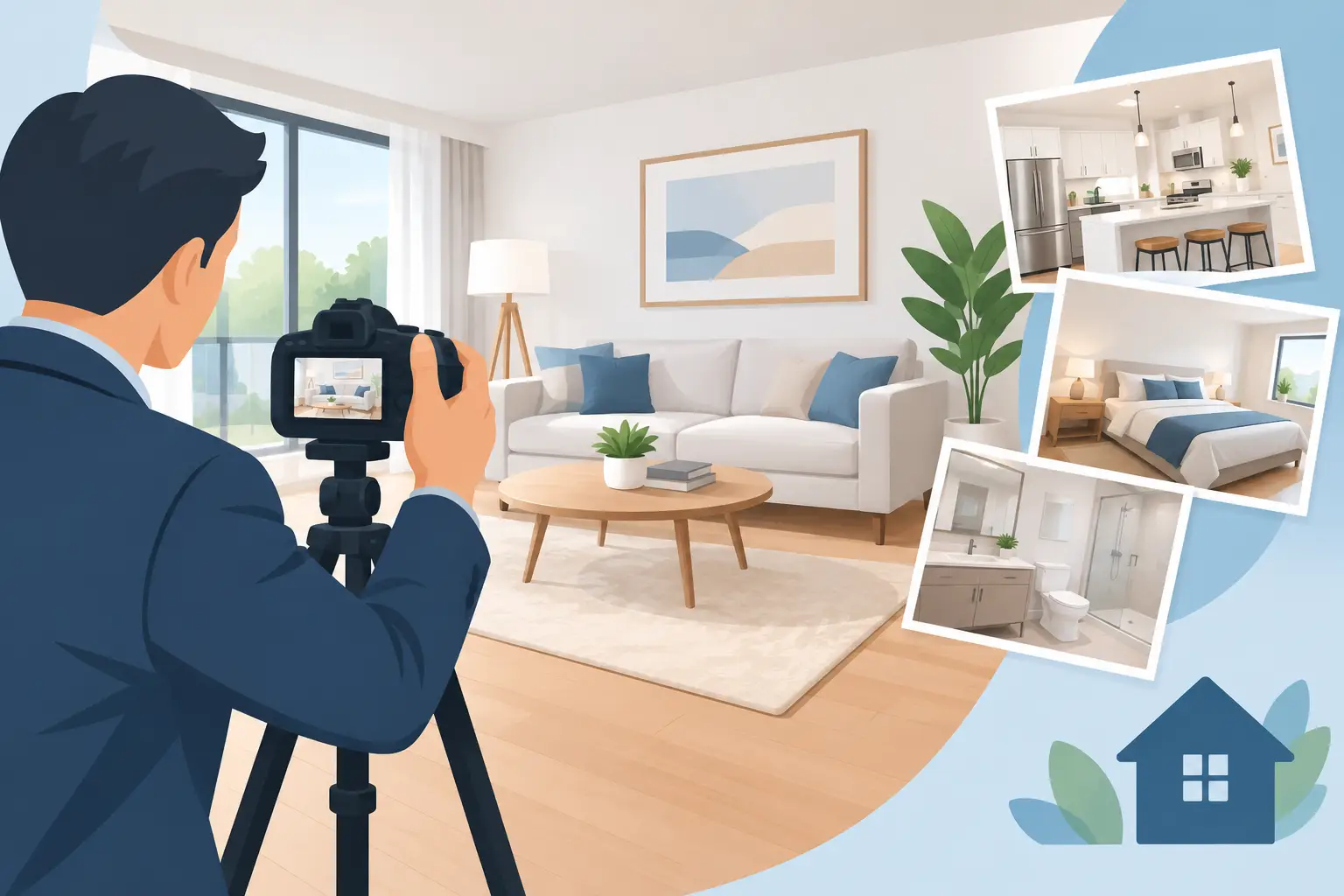
Every room does not need the same number of images. Prioritise the spaces that influence whether a tenant books an inspection: the front exterior, living area, kitchen, main bedroom, bathrooms, laundry, outdoor living area and parking.
The kitchen deserves particular attention. Photograph it from an angle that shows bench space, storage and key appliances. If there is a dishwasher, gas cooktop, walk-in pantry or a practical breakfast bar, make sure it is visible. One close image of a feature may be useful, but it should not replace a wider photo that explains the whole space.
In bedrooms, show enough of the floor area to indicate the likely furniture layout. Tenants want to know whether a room will fit a queen bed, desk or storage unit. Bathrooms should be spotless and clearly lit, with toilet lids down and personal toiletries removed.
Outdoor spaces should also be treated as usable rooms. A compact balcony can still be appealing if it is clean, private and shown in proportion to the apartment. For houses, include the backyard, entertaining area, garden and any shed or side access that adds practical value.
Choose angles that explain size and flow
Wide-angle photography can be useful, but it needs restraint. An extremely wide lens may make a room look larger online while creating disappointment at the inspection. That approach attracts clicks, but not necessarily suitable applicants.
A better result comes from photographing from a corner or doorway at a natural height, showing two walls where possible and allowing the viewer to understand how the room connects to the next space. Keep vertical lines straight. Leaning walls, curved door frames and distorted benchtops can make a professionally maintained property look poorly presented.
Do not block the view with large pieces of furniture, open doors or unnecessary close-ups. Take enough images to show the property’s flow, but avoid repeating nearly identical views. A concise, well-selected gallery is easier for renters to use than a long series of photos that adds little new information.
Present the exterior as carefully as the interior
The first image is often the front of the home, so it should create confidence immediately. Mow the lawn, sweep paths, remove hoses and bins, tidy garden beds and ensure the letterbox and front door are clean. If the property has a garage, carport, gated entry or secure parking, show it clearly.
Street appeal matters, but accuracy matters too. If the home is on a busy road, close to a commercial area or has limited front parking, photography should not try to hide the setting. The listing description and inspection will make these details clear. Honest images reduce unsuitable enquiries and help establish trust from the outset.
For apartments and townhouses, include the building entrance or a clear exterior image where appropriate. If access, parking or shared facilities are significant benefits, photograph them in a way that shows how they work for everyday living.
Keep styling practical, not misleading
Light styling can improve a rental listing. Fresh towels, a simple plant, neatly arranged cushions and a clear dining table can help tenants see how a room can be used. This is especially helpful for vacant homes, where a few carefully selected items may give scale to the living room or main bedroom.
There is a trade-off. Overstyling can distract from the property itself or create an impression that does not match the tenancy. Avoid expensive-looking furniture, decorative accessories or digitally added features that will not be present when the tenant moves in. Rental advertising works best when it is polished, useful and honest.
If professional styling is not appropriate for the budget or the property, good cleaning, strong lighting and careful composition will still make a meaningful difference.
Use professional equipment and editing with judgement
A mobile can take acceptable photos in good conditions, but professional rental photography is often worthwhile when a property is vacant, premium, unusually configured or competing in a high-supply market. A photographer brings suitable lenses, lighting knowledge and experience in presenting interiors without excessive distortion.
Editing should correct exposure, straighten lines and ensure colours are true to the property. It should not remove permanent features, alter views, intensify lawns beyond recognition or make rooms appear materially larger. Images that overpromise can lead to disappointed inspections, wasted time and a weaker applicant experience.
A floor plan can also complement photos for larger homes or properties with an unusual layout. It gives prospective tenants a practical way to understand bedroom placement, living zones and access to outdoor areas.
Review the listing as a tenant would
Before the listing goes live, view the images on both a desktop screen and a mobile. Most tenants will first see the property on their mobile, where dark images, cluttered compositions and poorly cropped photos are more obvious.
Check that the first few images communicate the property’s strongest genuine selling points. A renovated kitchen, bright living room, private courtyard or well-kept exterior may deserve an early position in the gallery. Then make sure the remaining photos answer practical questions about bedrooms, bathrooms, storage, parking and outdoor space.
The most effective top rental listing photo tips are not about visual tricks. They are about removing uncertainty. When photos are clean, current and clear, suitable tenants can decide to inspect with realistic expectations, which supports a more efficient leasing process for everyone.
A well-presented listing is an early sign that the property will be managed with care. Give the photography the same attention you expect tenants to give the home.