
Who Organises Smoke Alarm Checks in Rentals?
A smoke alarm check should not be an unexpected item on a tenant’s to-do list or a last-minute concern for a landlord. So, who organises smoke alarm checks in a rental property? In most cases, the owner carries the legal responsibility for ensuring alarms are installed, maintained and compliant. A property manager will often coordinate the practical work on the owner’s behalf.
The exact requirements differ between Australian states and territories. That means the right answer depends on the property location, the tenancy agreement and the type of check required. Clear communication between the owner, managing agent and tenant is what keeps the process straightforward.
Who organises smoke alarm checks for a rental property?
For a managed rental, the property manager commonly arranges routine smoke alarm servicing with a qualified provider. This is generally done as part of the property’s ongoing maintenance program, with the cost charged to the landlord in line with the management agreement.
The landlord remains responsible for meeting the applicable smoke alarm laws. Appointing an agent or specialist service provider does not remove that responsibility, but it gives the owner a reliable process for booking services, keeping records and following up any required repairs.
Where a property is self-managed, the landlord needs to organise the checks directly. They may use a licensed electrician, a smoke alarm compliance company or another suitably qualified provider, depending on local requirements and the work involved.
Tenants have an important role too. They need to allow lawful access for scheduled servicing, avoid interfering with alarms, and report faults, damage or repeated chirping promptly. In some jurisdictions, tenants may also have responsibilities around replacing accessible batteries during a tenancy. This should be confirmed against the rules that apply in the relevant state or territory.
What does a smoke alarm check involve?
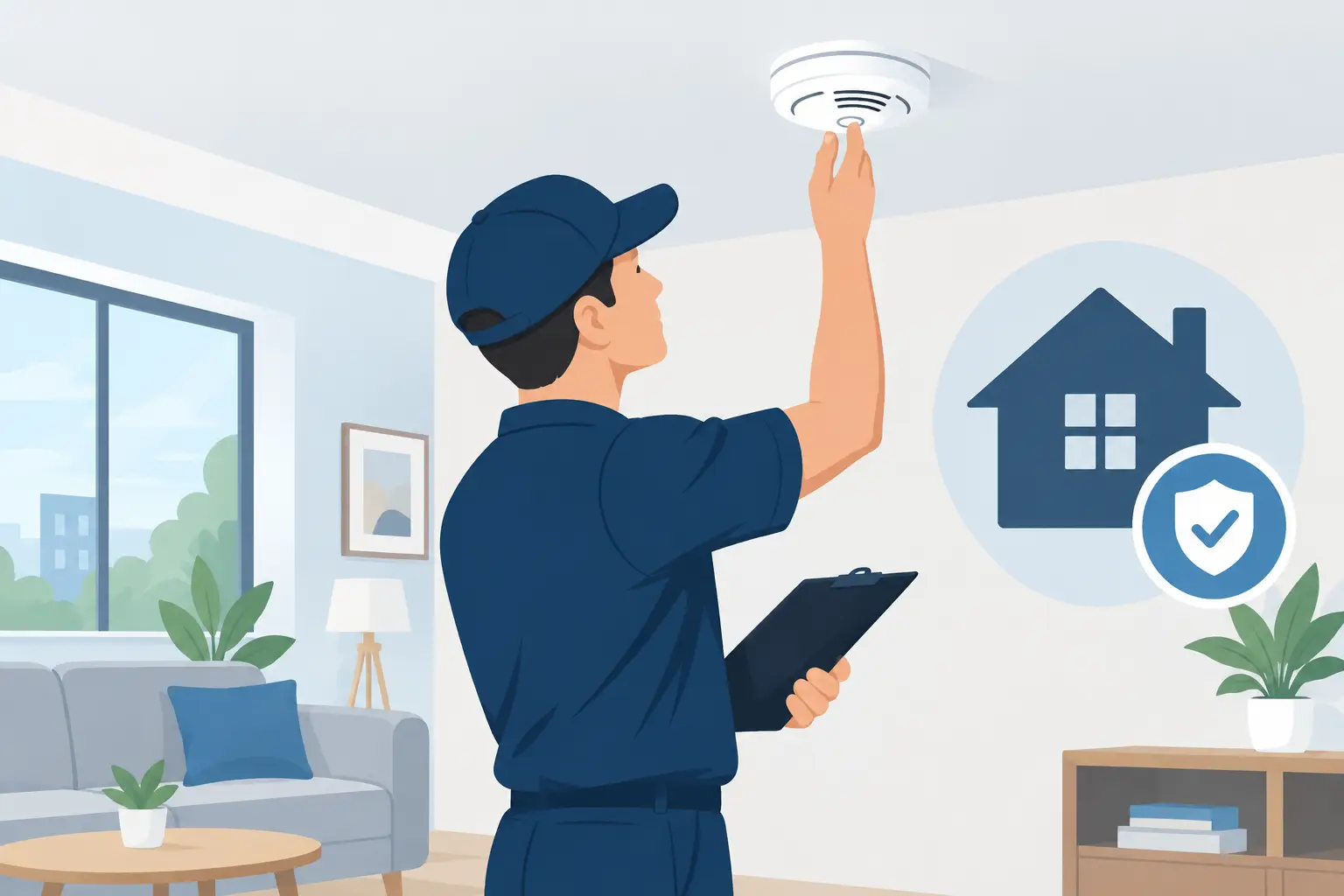
A proper check is more than pressing the test button. A service technician may test the alarm’s operation, inspect its condition and location, clean the unit where required, replace batteries or the alarm itself, and confirm whether the system meets current requirements.
The scope can vary. Some properties have battery-operated alarms, while others have hardwired alarms, interconnected alarms or a combination of systems. An older property may need upgrades that a newer home does not. If an alarm is damaged, expired or cannot be tested correctly, replacement should be arranged without delay.
Service providers generally issue a report or certificate after attending the property. This gives the owner and property manager a record of the visit, the work completed and any recommendations. Keeping these records is sensible even where a particular document is not specifically required, as they help demonstrate that maintenance has been managed appropriately.
Routine servicing and tenant-reported faults are different
Routine smoke alarm servicing is planned. It may occur annually, before a new tenancy starts, at the end of a tenancy, or at other intervals required by local legislation or an owner’s compliance program.
A fault reported by a tenant needs separate attention. A chirping sound may indicate a low battery, but it can also point to a fault, dust build-up or an alarm reaching the end of its service life. If an alarm is sounding without an apparent reason, the tenant should first make sure there is no fire or smoke risk. If there is any concern about an active fire, call 000 immediately.
For a non-emergency issue, the tenant should notify the property manager or landlord in writing as soon as possible. Providing a clear description of the problem, the location of the alarm and when it began will help the right contractor attend with the appropriate equipment.
Access, notice and appointments
Smoke alarm checks usually require access inside the home. Property managers should arrange an appointment with the tenant and give the notice required under the relevant tenancy laws, unless urgent circumstances apply.
Tenants should make reasonable efforts to provide access at the agreed time. This is particularly important when smoke alarms are located in bedrooms, hallways or high ceilings. If a tenant cannot be home, they can discuss access arrangements with the property manager before the appointment.
A missed appointment can create extra cost and delay a necessary compliance check. If the proposed time is unsuitable, early notice gives everyone the best chance of rescheduling without disruption.
Why state and territory rules matter
Australia does not have one identical set of smoke alarm rules for every rental property. Requirements can differ on alarm type, placement, interconnection, testing frequency, battery replacement and obligations at the start of a tenancy.
For example, a requirement that applies to a Queensland rental may not apply in the same way to a property in New South Wales, Victoria or another jurisdiction. Building age and the date of major renovations can also affect what is required.
Landlords should avoid relying on a generic checklist downloaded years ago. Compliance standards change, and a property that was acceptable when first purchased may need different alarms or additional work over time. A specialist service provider and an experienced property manager can help identify when advice or an upgrade is needed.
Responsibilities at a glance
The practical division of responsibilities is usually clear:
- The landlord funds required installation, replacement and maintenance, and remains accountable for compliance.
- The property manager coordinates servicing, tenant communication, contractor access and maintenance records when appointed to do so.
- The tenant reports problems promptly, does not disable or remove alarms, and provides access following the required notice.
- The smoke alarm technician inspects, tests and services the alarms within their qualifications, then records any work or recommendations.
This division may be adjusted by the management agreement or local tenancy rules. It is worth checking the agreement before assuming that a particular task has been included in a routine service.
Questions landlords should ask their property manager
A landlord does not need to manage every appointment personally, but they should understand the process. Ask whether smoke alarm servicing is included in the management service, whether a preferred compliance provider is used, and how service reports are stored and sent to the owner.
It is also useful to ask what happens if the technician identifies a failed alarm or an upgrade requirement. In some cases, the repair can be authorised and completed during the visit. In others, the owner may need to approve additional work first. Setting a sensible maintenance authority can reduce delays for urgent or minor works.
Elite Property Management Group takes a structured approach to rental administration because small maintenance tasks can have significant consequences when they are missed. A documented process for safety checks helps protect the property, supports tenants and gives owners visibility over work completed.
Common issues that cause delays
The most avoidable problem is a tenant not reporting a fault because they assume a chirp can wait until the next routine inspection. Smoke alarms should be reported promptly, especially if the sound continues after a battery has been checked or replaced where the tenant is permitted to do so.
Another issue is treating every alarm replacement as identical. Replacement alarms need to suit the existing system and the property’s legal requirements. A hardwired or interconnected system may require a different solution from a standalone battery alarm.
Finally, records matter. A completed check that cannot be verified later may create unnecessary uncertainty at a tenancy changeover, insurance discussion or compliance review. Retaining service reports is a simple administrative step that protects the owner’s position.
A practical approach for owners and tenants
For owners, the most reliable arrangement is a scheduled compliance program managed by a qualified provider, with reports kept alongside the property’s maintenance records. For tenants, the priority is to report any issue early and make the property available for planned servicing.
If you are unsure whether a smoke alarm check is due, contact the property manager rather than waiting for the next general inspection. A quick query can confirm the service history, clarify responsibilities and help keep the home safe for everyone living in it.