
How to Document Property Condition for a Rental
A clear record of document property condition can prevent a routine tenancy from becoming a dispute about marks, damage, cleaning or repairs. For rental owners and tenants, the condition report is not just administration. It is the agreed starting point for assessing how the property has been cared for during the tenancy.
A well-prepared report protects both parties. It gives owners a reliable reference for their investment, and it gives tenants confidence they will not be held responsible for pre-existing issues. The best reports are detailed, dated and supported by photographs, rather than relying on broad descriptions such as “good condition”.
Why document property condition carefully?
At the beginning of a tenancy, a property can appear clean and well maintained while still having small defects that matter later. A scuff on a wall, a chip in a benchtop, a cracked tile or a worn section of carpet may not affect day-to-day living, but it should still be recorded.
Without an accurate entry record, it can be difficult to establish whether an issue was already present, resulted from fair wear and tear, or was caused during the tenancy. This is particularly relevant at the end of a lease, when the final inspection and bond process take place.
The report should reflect the actual condition of the home on the day the tenant takes possession. It should not be treated as a sales description or a general checklist completed from memory. Precision is more useful than flattering language.
What a rental condition report should include
A condition report should cover every accessible part of the property, including internal rooms, outdoor areas, fixtures and inclusions. Requirements and forms vary between Australian states and territories, so the report must be prepared in line with the relevant tenancy legislation and local process.
For each room or area, record the condition of surfaces and items such as walls, ceilings, floors, windows, blinds, doors, light fittings, power points, wardrobes and heating or cooling equipment. Kitchens require close attention to appliances, cupboards, benches, splashbacks, taps, sinks and rangehoods. In bathrooms and laundries, note tiles, grout, mirrors, exhaust fans, shower screens, basins, toilets and plumbing fixtures.
External areas should receive the same care. Record the condition of fencing, gates, paths, driveways, gardens, letterboxes, clotheslines, sheds, balconies and any pool or spa area. If the property includes a garage, carport or storage space, document the doors, remotes, walls, floors and supplied shelving.
Descriptions should be specific enough for someone who was not present to understand the issue. For example, “small paint chip on bedroom two door, lower left side” is more useful than “door marked”. “Two faint stains near lounge room window” is clearer than “carpet used”.
Photographs provide essential context
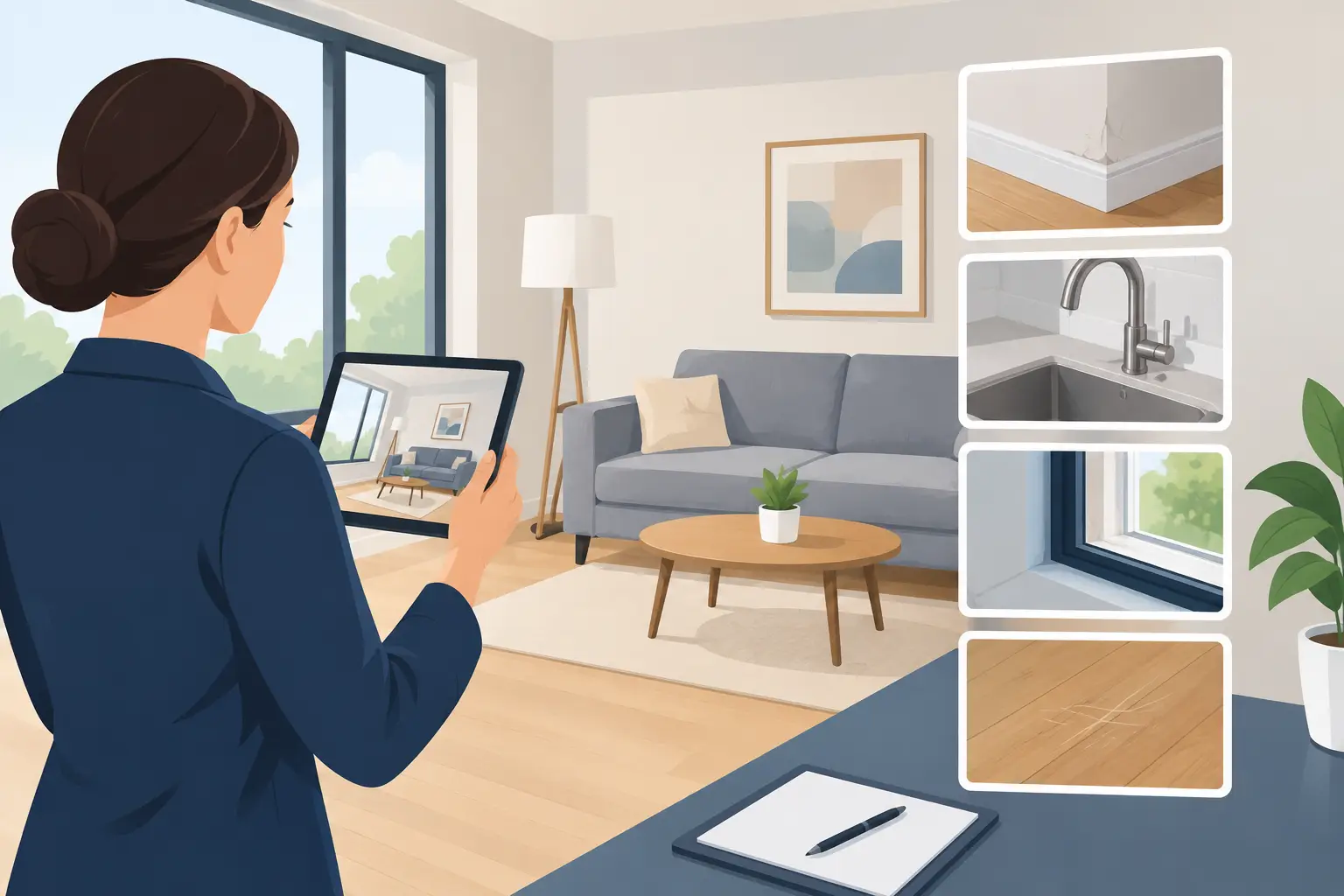
Photographs support written descriptions, but they do not replace them. A photo can show where a mark sits; the written report explains what it is and confirms that it was present at the start of the tenancy.
Take wide photos to show the overall condition of a room, then close-up photos of existing defects, damage or areas of concern. Ensure images are clear, adequately lit and saved with the inspection records. Where possible, use date-stamped images and retain them in an organised folder linked to the property and tenancy.
Video can also be helpful for demonstrating the operation of items such as garage doors, air conditioning units or appliances. However, it should be supplementary evidence. A written report remains easier to review, compare and refer to during a final inspection.
The right time to record condition
The entry condition report should be completed immediately before, or at the commencement of, the tenancy. The property should be vacant, cleaned and ready for the tenant to move in. Trying to prepare the report after furniture has been moved in makes it harder to assess floors, walls and inclusions properly.
Tenants should receive the report within the timeframe required in their state or territory. They should be encouraged to review it carefully, add comments where needed and return it by the required date. This is the tenant’s opportunity to identify anything missed during the original inspection, including faults that only become apparent once they begin using the property.
If a tenant raises a reasonable correction, it should be considered promptly and the record updated where appropriate. This creates a more accurate shared record from the outset, rather than leaving uncertainty until the tenancy ends.
Periodic inspections serve a different purpose. They help identify maintenance needs, unauthorised alterations, cleanliness issues and potential tenancy breaches while there is time to address them. They should not be used to retrospectively alter the original entry condition report.
At the end of the tenancy, the final inspection compares the property against the entry record, allowing for fair wear and tear. The comparison should be methodical and based on evidence, not assumptions.
Fair wear and tear versus tenant damage
This distinction is central to any condition assessment. Fair wear and tear is the gradual deterioration that occurs through normal, reasonable use of a property. It is not the same as damage caused by neglect, misuse, accident or an unapproved alteration.
Faded curtains from sunlight, lightly worn carpet in a high-traffic area and ageing paint may be examples of fair wear and tear. A large burn in carpet, holes not associated with approved wall hangings, or a broken fixture caused by improper use may require further discussion.
The age, quality and expected lifespan of an item matter. A landlord cannot reasonably expect an old carpet or ageing appliance to be returned in new condition. Equally, a tenant is expected to take reasonable care of the property and report maintenance concerns before a small issue becomes more significant.
There are situations where the answer is not immediately clear. Water damage, mould, marks on walls and garden condition can have more than one cause. In these cases, photographs, maintenance records, inspection notes and clear communication are more valuable than a rushed conclusion.
Common gaps that create avoidable disputes
The most common problem is vague reporting. Terms such as “clean”, “average” or “good” are open to interpretation unless they are supported by details and images. Another issue is overlooking less obvious inclusions, including remote controls, keys, flyscreens, smoke alarms, bins and appliance accessories.
Poor photo management can also weaken an otherwise thorough report. Images should be identifiable, retained securely and easy to match with the relevant room or item. A collection of unlabelled mobile photos may be difficult to use months or years later.
It is also unhelpful to wait until a final inspection to raise an ongoing maintenance issue. Tenants should report repairs promptly through the agreed process. Owners and property managers should keep a record of repair requests, trades attendance and completed work. This helps distinguish an unresolved property issue from tenant-caused damage.
A consistent process benefits everyone
For owners, a detailed condition process supports better asset management. It creates a reliable baseline, helps identify maintenance early and provides evidence if a bond claim or insurance question arises. It also supports a professional tenant experience by showing that the property has been prepared and assessed properly.
For tenants, taking time to review the entry report protects their position at the end of the lease. They should check each room, test reasonable inclusions, photograph concerns and return their comments within the required timeframe. Keeping a copy of the completed report and relevant correspondence is sensible throughout the tenancy.
At Elite Property Management Group, clear inspection records form part of a structured approach to managing rental homes. A careful report at the start of a tenancy, regular communication during it and an evidence-based final inspection give both owners and tenants a clearer path forward.
If something does not look right when a tenant receives the keys, record it early and communicate it clearly. Small details documented at the right time can save both parties considerable time and uncertainty later.